


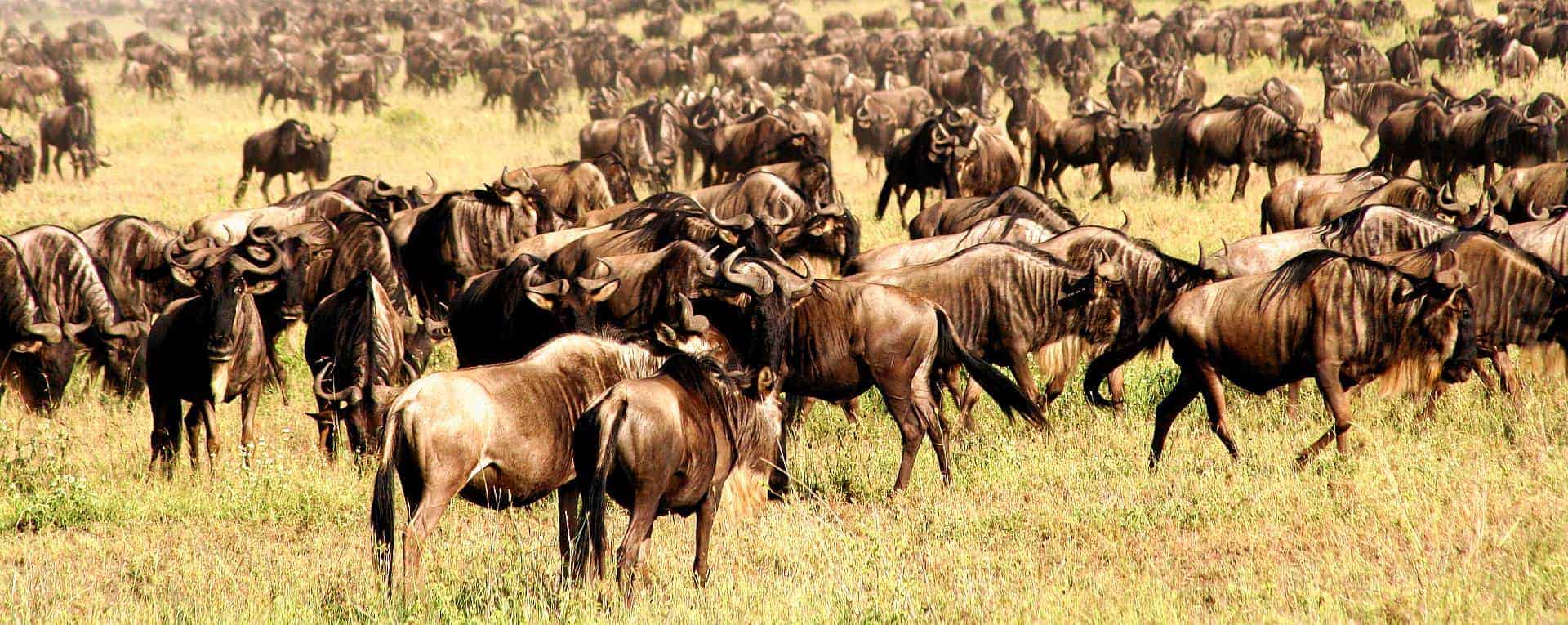
The plains of East Africa come alive every year with a thundering spectacle – The Great Serengeti Wildebeest Migration. Over 2 million wildebeest, joined by hundreds of thousands of zebra and gazelle, embark on a breathtaking journey across Tanzania and Kenya in search of greener pastures. This awe-inspiring event, dubbed the “greatest show on Earth”, is a once-in-a-lifetime experience for any nature enthusiast.
A Timeless Dance with Nature:
Driven by the rhythm of the rains, the migration is a complex, year-round cycle. Here’s a glimpse into their incredible journey:
- November – December: The herds, sensing the first rains, move south from the Masai Mara in Kenya to the lush short-grass plains of the southern Serengeti.
- February: Calving season transforms the plains into a sea of life, with over 500,000 calves born within a few weeks. Witness the wonder of new life amidst the thundering hooves.
- March – May: As the grasses dry, the migration swings north, traversing the vast plains and facing treacherous river crossings. The iconic Mara River crossing, with wildebeest braving crocodile-infested waters, is a highlight.
- June – October: Reaching the lush grasslands of the northern Serengeti, the herds graze and replenish before the cycle begins anew.
Beyond the Numbers:
The migration is more than just a movement of millions. It’s a drama of survival, where predators like lions and crocodiles lurk, and the elements themselves pose challenges. Witnessing this struggle for life unfolds before your eyes is a humbling experience.
Planning Your Serengeti Safari:
The migration occurs year-round, but the best time to witness specific stages depends on your preference. Here’s a quick guide:
- Calving season (February – March): Witness the wonder of newborn calves and abundant life.
- Mara River crossings (July – August): See the dramatic struggle and raw power of nature.
- Herds in the north (July – October): Experience the vastness of the migration and diverse landscapes.
Tips for Responsible Tourism:
- Choose eco-friendly tour operators who prioritize the well-being of the animals and ecosystem.
- Respect the animals’ space and avoid disturbing their movements.
- Minimize your environmental impact by following responsible waste disposal and minimal water usage practices.
The great Serengeti Wildebeest Migration
The Great Serengeti Wildebeest Migration is a journey that will leave you breathless and forever etched in your memory. Start planning your African adventure today and be part of this unforgettable natural wonder!
RELATED POST:
Top Tanzania Safari Parks You Shouldn’t Miss
Pingback: What Predators Hunt Wildebeests During the Migration?
Pingback: How Do Lions Hunt During the Wildebeest Migration?
Pingback: Do Crocodiles Attack Wildebeests During River Crossings?
Pingback: What Other Animals Migrate with the Wildebeests?
Pingback: How Do Zebras and Gazelles Benefit from the Migration?
Pingback: Are There Elephants and Rhinos in Masai Mara During the Migration?
Pingback: Do Wildebeests Ever Get Lost During the Migration?
Pingback: What is the Success Rate of Predators Hunting During the Migration?
Pingback: What Are the Best Luxury Camps in Masai Mara for the Migration?
Pingback: What Are the Best Budget Camps for the Migration Safari?
Pingback: How Far in Advance Should I Book My Migration Safari Accommodation?
Pingback: Are There Eco-Friendly Lodges in Masai Mara for the Migration?
Pingback: The Best Tented Camps for Wildebeest Migration Safaris
Pingback: Which Lodges Offer the Best Views of the Migration?
Pingback: Do Lodges Provide Guided Tours for the Migration?
Pingback: The Best Honeymoon Safari Lodges in Masai Mara
Pingback: Can I Stay Inside Masai Mara National Reserve During the Migration?
Pingback: What is the Best Way to Get to Masai Mara for the Great Migration?
Pingback: What is the Best Way to Travel from Nairobi to Masai Mara?
Pingback: Is a Self-Drive Safari Recommended for the Wildebeest Migration?
Pingback: How Do I Prepare for a Migration Safari in Masai Mara?
Pingback: What Should I Pack for a Wildebeest Migration Safari?
Pingback: What Are the Visa Requirements for Visiting Masai Mara?
Pingback: How Do I Avoid Crowds During the Migration Safari?
Pingback: What Are the Best Camera Settings for Photographing the Wildebeest Migration?
Pingback: What is the Best Time of Day to Photograph the Migration? - Seko Tours Blog
Pingback: Are Drones Allowed in Masai Mara for Filming the Migration?
Pingback: What Are the Best Photography Locations for the Wildebeest Migration?
Pingback: Do Lodges Offer Photography Workshops for the Migration?
Pingback: - Seko Tours Blog
Pingback: How Do I Take Great Action Shots of the Migration?
Pingback: Are Professional Photography Safaris Available in Masai Mara?
Pingback: What Are the Challenges of Photographing the Wildebeest Migration?
Pingback: How Does the Wildebeest Migration Impact the Maasai People?
Pingback: What is the Maasai People’s Perspective on the Wildebeest Migration?
Pingback: Can I Visit Maasai Villages During the Migration Safari?
Pingback: How Do Local Communities Benefit from Tourism During the Migration?
Pingback: What Traditional Maasai Beliefs Are Associated with the Migration?